

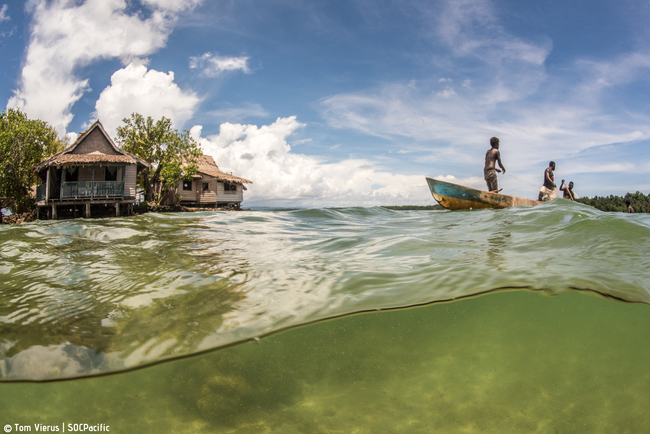
ZMT envisions a world where societies and tropical coastal ecosystems thrive together
ZMT is committed to its vision and understands it as an active contribution to global transformation processes in the context of climate change, biodiversity loss, and increasing social inequalities. For societies and ecosystems to thrive together, development pathways shall align with the resilience of natural systems, while ensuring fairness and shared prosperity.
At its core is the ambition to generate scientifically grounded solutions for sustainable and just coastal development and to embed these in policy and societal decision-making. In doing so, ZMT addresses the critical need for biodiversity in the ocean and on land, food security (‘blue food’) and livelihoods, climate change mitigation and adaptation.
The research institute aims to strengthen evidence-informed policymaking at local, national, and international levels.This includes supporting partner institutions and communities in the tropics as well as contributing to international sustainability agendas.
Sustainable coastal and ocean futures depend on fair access to knowledge, inclusive multi-level governance and the meaningful participation of coastal communities as co-creators and agents of change.
ZMT positions itself as an excellent research centre and knowledge broker between science, policy, business and practice, advancing transformative approaches such as decarbonization (including marine carbon-sequestration), circular economic systems, and sustainable blue economies.
In the long term, ZMT seeks to catalyze systemic change that extends beyond individual projects—towards resilient social-ecological systems in which coastal communities can act with agency and lead their own sustainable coastal future.
This vision represents both a scientific mandate and a political aspiration.