



Tropical Coasts in the Earth System
Tropical coastal regions represent social-ecological systems at the intersection of land, ocean, and atmosphere. They host exceptional biodiversity, regulate global climate through blue carbon storage and heat absorption in the ocean, and sustain millions of livelihoods through fisheries, tourism, and coastal agriculture. Yet these regions remain underrepresented in current Earth system models, limiting our ability to understand how global change affects tropical coastal ecosystems and societies, and how these areas in turn influence the Earth system.
TropEcS (Modelling Socio-Economic Dimensions across Tropical Coastal Ecosystems and the Earth System) is a new research focus launched to strengthen ZMT’s integrated modelling capacities. It combines expertise in Earth system modelling – including physical ocean dynamics, biogeochemistry, ecosystem responses, and human-environment interactions – with ZMT’s long-standing strengths in tropical coastal research. This integration bridges detailed coastal process understanding and local knowledge with global and regional modelling, enabling a more comprehensive representation of tropical coastal areas within Earth system frameworks.
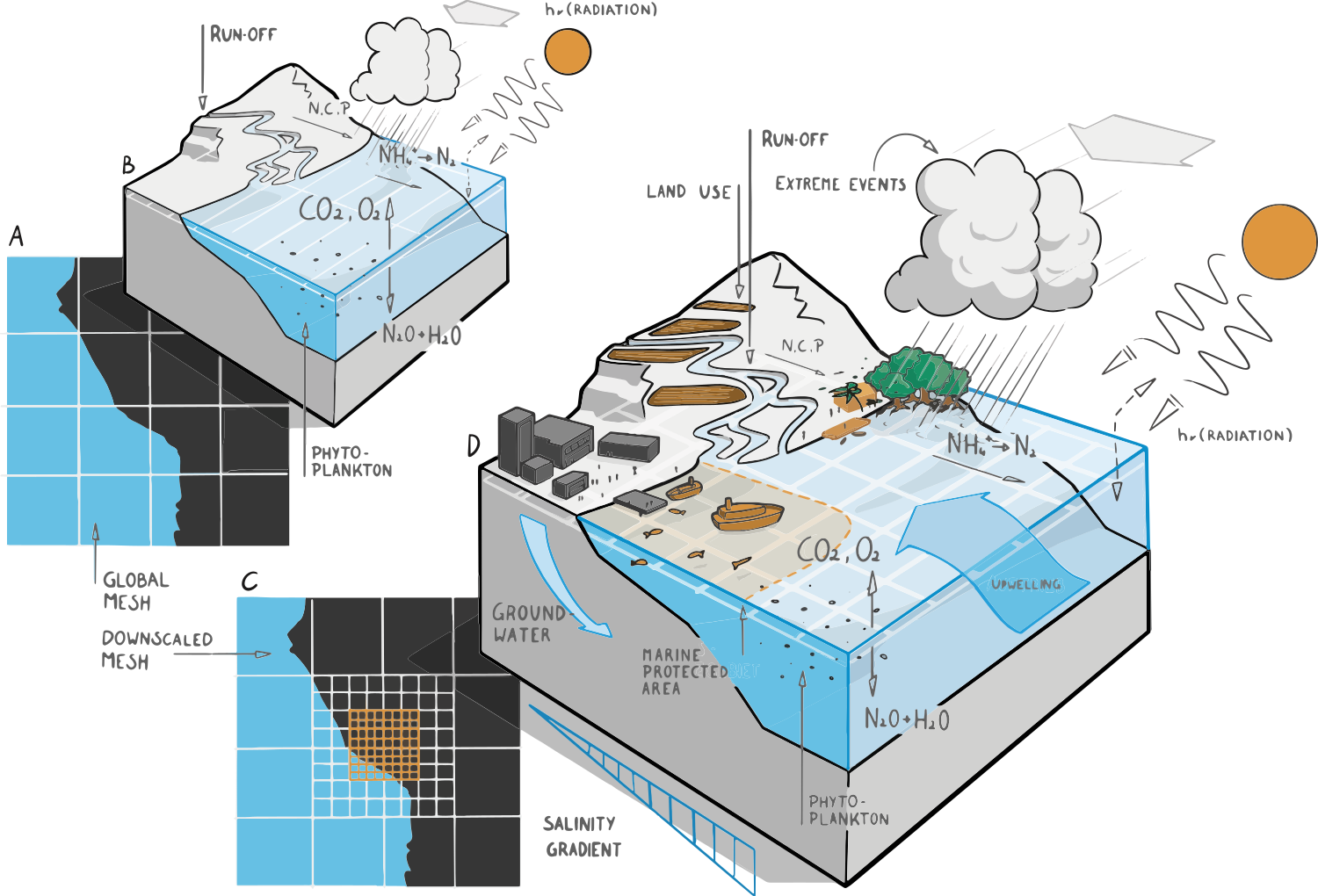
Figure 1: TropEcS vision for representation of coastal processes in Earth system models (ESMs). A represents a coastal cross-section in a typical ESM with coarse horizontal resolution, while B indicates the processes commonly represented in ESMs. C shows a conceptual downscaling needed for representation of the coastal area, and D illustrates ecosystem model components we envision to be represented within TropEcS.
Integrating Scales and Disciplines
TropEcS unites expertise across physical, biogeochemical, ecological, and social sciences to study the coupled dynamics of tropical coastal systems. Through advanced modelling, we aim to connect local ecosystem processes to global climate and biogeochemical feedbacks and provide a scientific foundation for more sustainable and adaptive management of coastal regions.
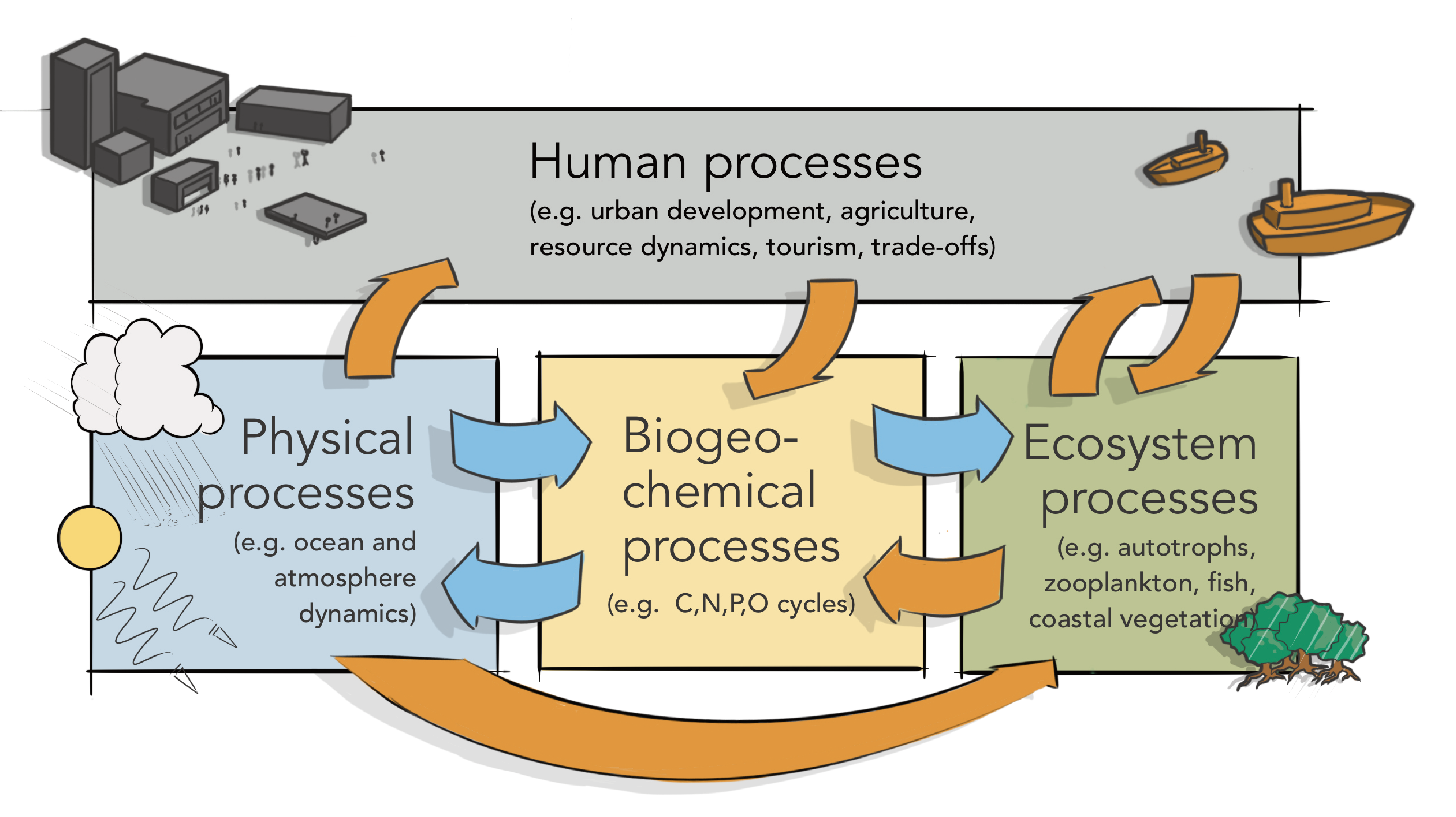
Figure 2: Illustration of interactions between sub-processes in Earth system modelling. Blue arrows represent established model linkages, while orange arrows highlight new interactions, aimed to be developed within TropEcS.
Scientific Vision
By connecting modelling, conceptual knowledge, data science, and field research, TropEcS will build a framework to explore critical questions of coastal resilience under global change. Its vision is to develop a unified coastal modelling perspective that links local and global scales while integrating natural and human dimensions.
Equitable partnerships and enduring research collaborations, both between the Global North and South and within South–South networks, are central to this vision. These collaborations aim to form strong, inclusive communities of expertise, equipping the next generation of scientists and modellers with the knowledge and capacity to advance this field of research.
TropEcS Research Groups
Research within TropEcS is carried out by six research groups that investigate different components of tropical coastal systems and connect their modelling approaches. Together, they bring expertise in physical, biogeochemical, ecological, and social-ecological modelling. Their work is complemented by other ZMT research groups that contribute their specific expertise to TropEcS
- Earth System Modelling
The Earth System Modelling working group investigates physical processes in tropical coastal regions, particularly ocean turbulence and its influence on the transport of heat, energy, and tracers. Using high-resolution simulations and novel parameterisations, the group improves the representation of small-scale processes in Earth system models and explores their implications for coastal dynamics, biogeochemical cycles, and ecological change
- Hydro-Geochemical Fluxes
The Hydro-Geochemical Fluxes working group investigates how hydrological processes, landscape characteristics, and human activities influence water and material fluxes between land and sea. By combining hydrological, hydrogeological, and geochemical models, the group analyses the transport of water, nutrients, and contaminants through groundwater and surface waters from tropical catchments to the coastal ocean, and how these fluxes change under different environmental conditions
- Earth Surface and Eco-Evolutionary Dynamics
The Earth Surface and Eco-Evolutionary Dynamics working group investigates interactions between biodiversity, ecological processes, and landscape evolution. It examines functional traits of terrestrial and aquatic organisms and models how biological communities and their environments influence each other. This research contributes to a better representation of functional diversity and long-term ecological change in Earth system models
- Biogeochemical Modelling
The Biogeochemical Modelling working group investigates how physiological traits, species interactions, and environmental conditions shape aquatic ecosystem dynamics and biogeochemical cycles. It develops mechanistic and trait-based models that connect processes from individual organisms to entire ecosystems. Research topics include the marine nitrogen cycle, plankton communities, and coral reef responses to environmental change.
- Ecosystems and Resource Sustainability
The Ecosystems and Resource Sustainability working group investigates the functioning of marine ecosystems and their role in the sustainable use of natural resources. It develops ecological models that integrate physiological processes, high-resolution ocean simulations, and local knowledge. Working with coastal communities, the group explores how ecosystems respond to environmental change and which adaptation strategies can support sustainable resource use
- Future Oceans and Fisheries
The Future Oceans and Fisheries Working Group investigates how climate change and resource use shape tropical marine ecosystems, fisheries, and livelihoods. The group uses marine ecosystem models and links them with economic models to explore interactions between ecological dynamics and fisheries, identify sustainable fisheries strategies, and assess pathways to resilient tropical food systems.
Additional Contributions to TropEcS
Beyond the six TropEcS research groups, other ZMT research groups and organisational units contribute complementary expertise and activities. Their involvement broadens the perspectives and approaches represented within TropEcS and creates further opportunities for interdisciplinary exchange and collaboration. They can also be approached for research visits and exchanges through the TropEcS Guest and Researcher Exchange Programme.
- Transformation Through Transdisciplinarity
The Transformation Through Transdisciplinarity working group brings social science perspectives into the modelling of tropical coastal systems. It focuses on reflexive and participatory modelling approaches that incorporate diverse knowledge systems, local realities, and societal perspectives. The group helps critically examine model assumptions, co-develop research questions with local stakeholders, and strengthen the societal relevance of modelling outcomes.
- Carbon and Nutrient Cycling
The Carbon and Nutrient Cycling working group investigates biogeochemical processes in tropical coastal waters and their role in carbon and nutrient cycling. Within TropEcS, a particular focus lies on process-based modelling of riverine biogeochemistry and the implementation of these processes in land surface models. This contributes to a better representation of carbon and nutrient transport and transformation along the land–ocean continuum in Earth system models.
- Office for Knowledge Exchange
The Office for Knowledge Exchange supports collaboration and knowledge exchange between researchers and societal actors. Within TropEcS, it contributes expertise in stakeholder engagement and co-design, and develops capacity-building tools and events that facilitate interdisciplinary learning and collaboration. These activities help connect modelling approaches with local perspectives, societal needs, and practical applications.
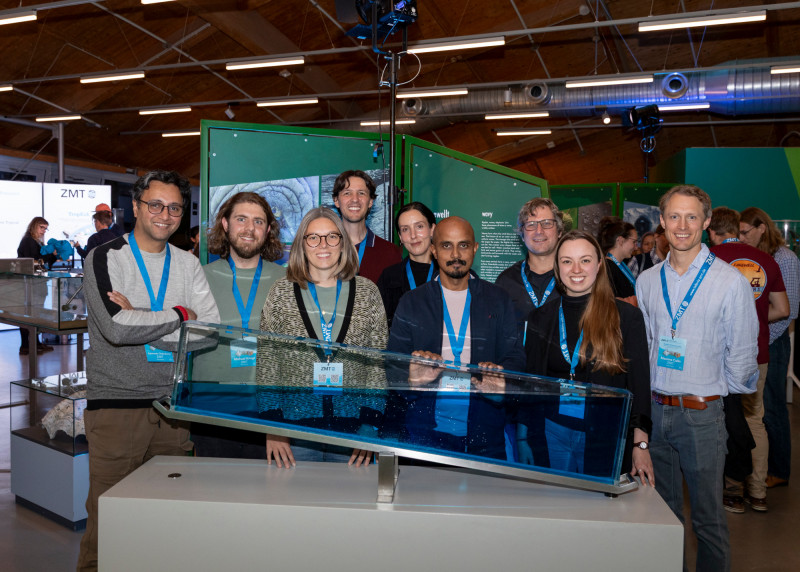
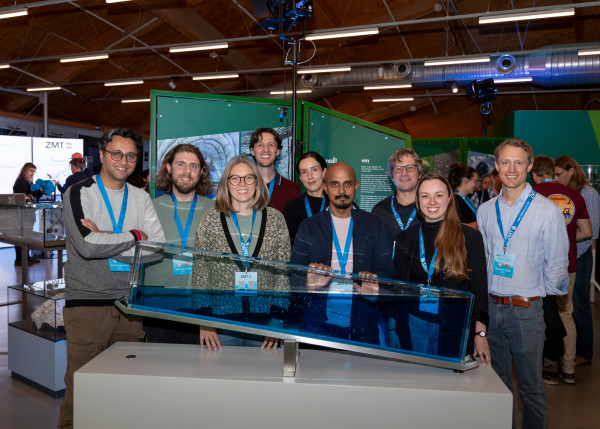
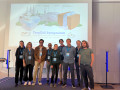
Team at the Universum: Subhendu Chakraborty, Michael Kriegl, Camilla Novaglio, Esteban Acevedo-Trejos, Gabriela Garcia, Murugan Ramasamy, Nils Brüggemann, Alexandra Klemme, Maxime Colin, | Photo: Jan Meier, ZMT


-
 Contacts