




The biggest disadvantage of conventional vegetative propagation of algae is the impoverishment of the gene pool, which can lead to total failure in the event of minor environmental changes. The aim of the project is therefore to develop a modular cultivation system for macroalgae that, for the first time, enables targeted control of sexual reproduction under controlled environmental conditions.
This involves both the technical implementation of dynamically regulatable biotopes with marine characteristics and the biological validation of the sexual phases through defined trigger points (e.g., light, temperature, salinity, current). One focus is on the transferability of the system to various macroalgae species with economic or ecological relevance.
The core objective of the development is a micro-processor-controlled, cloud-based automation unit that can be freely assembled and parameterized.
In addition, bio-inspired surfaces and carrier structures are to be developed that promote the targeted attachment of macroalgae spores and zygotes in order to enable a controlled generation sequence and stable establishment of new algae populations.
In the subproject “Algae Sex,” we are investigating the induction of sexual reproduction in macroalgae and the optimization of spore/ zygote settlement.
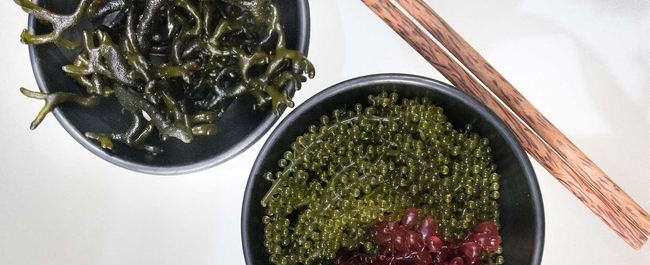
Representatives of green algae (e.g., Caulerpa spp., Codium spp.) and red algae (e.g., Asparagopsis spp., Gracilaria spp.) will be examined as model organisms. The selected species are also of economic importance: Gracilaria is a relevant source of agarose, Codium is increasingly cultivated for human consumption, and Caulerpa is used both as a delicacy and in aquariums.
 Contacts
  Working Groups
  Project flyer for download