


New Master programme launched: ZMT and UENR are training the next generation of blue economy experts in Ghana
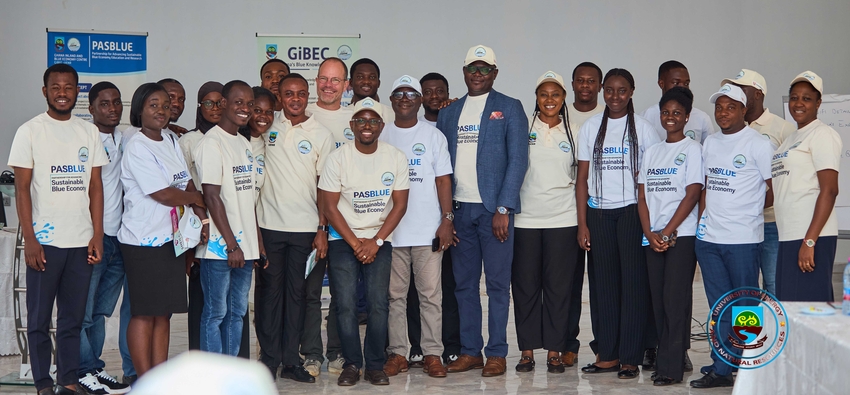
A new postgraduate programme at the University of Energy and Natural Resources (UENR) in Sunyani, Ghana, aims to equip future scientists and professionals with the expertise needed to develop a sustainable blue economy. The programme MPhil/MSc Blue Economy & Sustainability Science was officially inaugurated in November, with the first cohort of students already recruited and teaching set to begin in December. The initiative builds on the collaboration between UENR and the Leibniz Centre for Tropical Marine Research (ZMT) in Bremen within the PASBLUE project, funded by the German Academic Exchange Service (DAAD).
The opening of the new master's programme marks an important milestone in the partnership between the two institutions. Only recently, ZMT and UENR signed a cooperation agreement to strengthen joint research, academic training and scientific exchange in the field of sustainable blue economy.
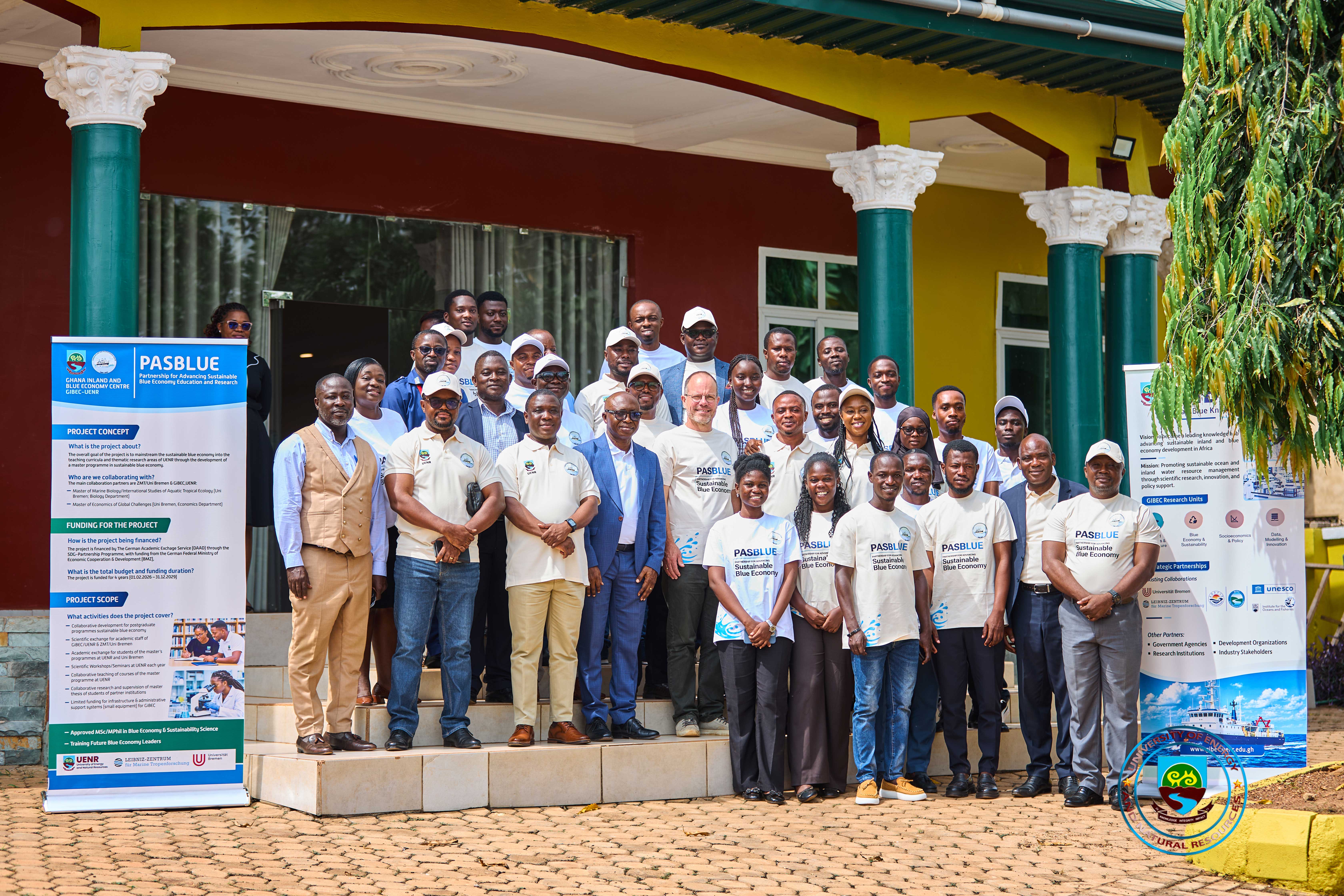
The first cohort of students has already been recruited and teaching set to begin in December | Photo: UENR
The development of the postgraduate programme brings together expertise from Ghana and Germany. Professor Berchie Asiedu from UENR and Professor Achim Schlüter from ZMT and the University of Bremen are driving forward the cooperation, which seeks to establish sustainable blue economy as an integral part of academic education and research at UENR.
The course will be jointly taught by academic staff of UENR and ZMT. The ZMT academic team includes Professor Achim Schlüter, Professor Raimund Bleischwitz and ZMT postdoctoral researcher Dr Raymond Ayilu. Professor Berchie Asiedu leads the UENR academic team. In addition to his academic position at UENR, Asiedu serves as Deputy Executive Director of the Ghana Fisheries Commission and plays a key role in shaping and advancing Ghana’s national blue economy strategy. His involvement ensures that the master's programme is closely aligned with the needs of policymakers, bringing current policy challenges and practical perspectives into academic training.
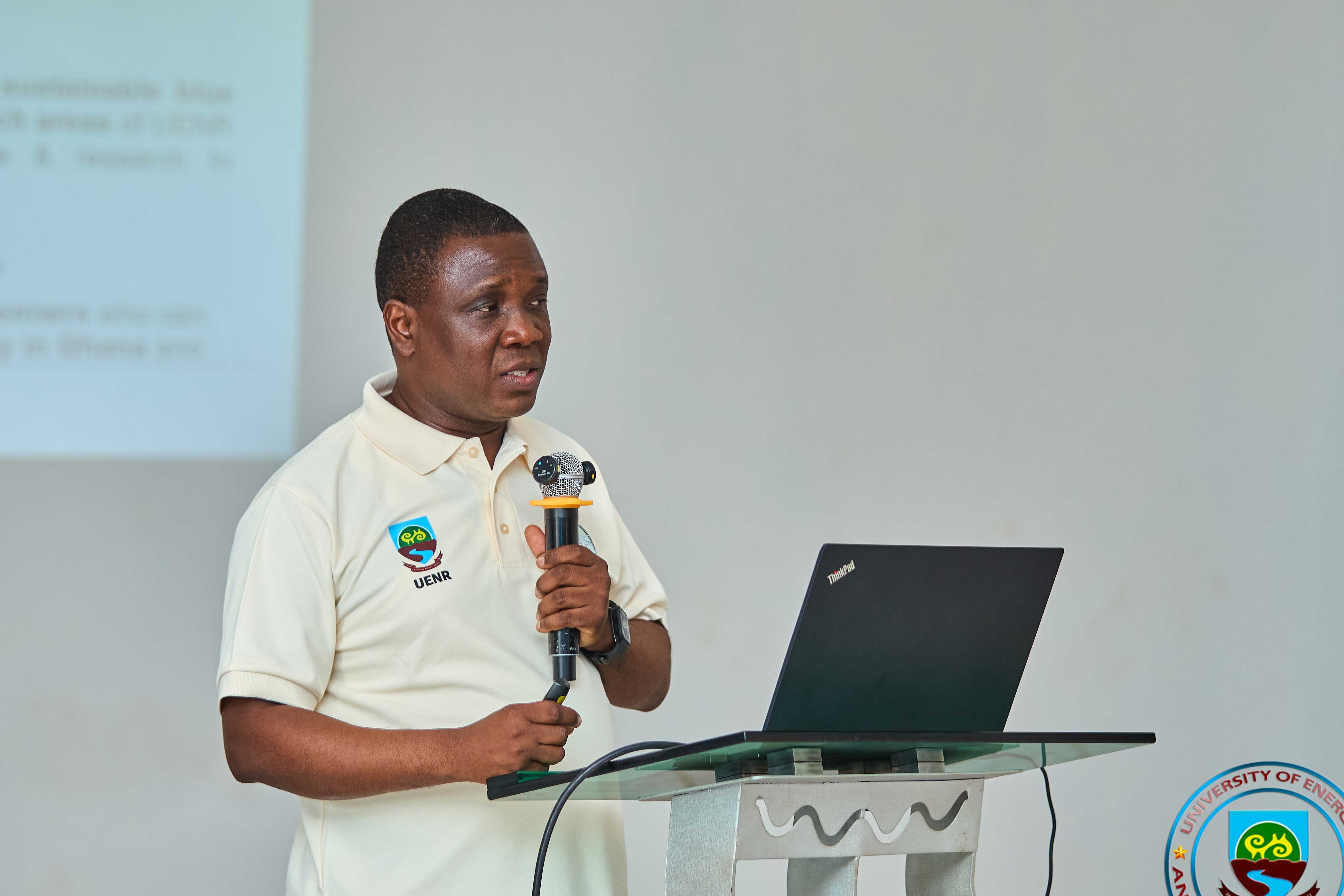
Professor Berchie Asiedu leads the UENR academic team | Photo: UENR
Ghana’s coastal and inland waters offer considerable potential for economic development, food security and employment. However, harnessing this potential while protecting aquatic ecosystems requires scientific expertise, appropriate governance frameworks and qualified professionals. The new programme seeks to address these challenges by linking academic education with the sustainable management of aquatic resources.
Through PASBLUE (Partnership for Advancing Sustainable Blue Economy Education and Research), ZMT and UENR are collaborating on curriculum development, teaching and supervision, academic exchanges for students and researchers, as well as scientific workshops. The project also supports capacity development at UENR’s newly established Ghana Inland and Blue Economy Centre (GiBEC).
Coordinated by ZMT, PASBLUE runs from February 2026 to December 2029. Its long-term ambition is to strengthen expertise in sustainable blue economy research and practice not only in Ghana but across West Africa.
 Contacts
 Programme Areas
 Working Groups
 Other relevant links