

About me
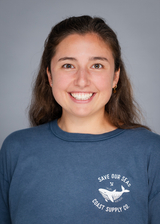
Trained as an interdisciplinary environmental scientist, I am strongly interested in understanding human-ocean interactions and contributing to the conservation of marine biodiversity and ecosystems. My research background spans diverse fields, from sustainable tourism, climate change adaptation (incl. work with the UNFCCC) and North-South cooperation (with GIZ) to coral reef and reef fish ecology and functional biogeography. Beyond research, I am an underwater photographer and passionate about promoting ocean literacy through education, science communication and outreach on marine conservation and climate change. As a triathlete, I bring this passion into the world of sports, racing with #ForTheOcean to spark conversations about marine biodiversity and remind others that a healthy ocean matters to us all. I believe marine conservation requires collaboration across communities and sectors, because its importance extends far beyond the coast.
Current research topic
My work within the CREATE project, part of the German Marine Research Alliance (DAM) research mission sustainMare, focuses on marine biodiversity conservation, knowledge transfer and marine education. In Phase I, I investigated governance and institutional change in marine protected areas, focusing on the Whale Sanctuary off Sylt and Amrum and the conservation of the harbour porpoise (Phocoena phocoena), our only endemic whale species. Building on these findings and the networks established during the first phase, my work in Phase II places a stronger emphasis on transferring scientific knowledge into society through three activities: Back to School, developing educational materials on marine conservation and fisheries; citizen science, connecting CREATE’s research on environmental DNA (eDNA) with public engagement and hands-on learning; and Netzwerk Nordseeschutz, fostering knowledge exchange and collaborative action for North Sea conservation. Within Programme Area 5 (PA5), Societal Impact, I am further exploring transdisciplinary approaches and how collaboration between research and societal actors can strengthen knowledge transfer and contribute to transformative change and effective marine conservation.
Literature
Homes, W. (in prep.). A Historical Lens on Europe’s First Whale Sanctuary: Analysing Institutional Change for Future Efficient Harbour Porpoise Conservation.
Homes, W., Schlüter, A., Glaser, M. (in prep.). Avoiding Paper Parks: A Governance Analysis of and Policy Recommendations for the Whale Sanctuary in the German North Sea for Harbour Porpoise Conservation.
Eucker, D., Kienberger, S., Schuster, S., Berendsen, A., Saavedra, C., Hunsinger, L., Becher, M., Yermolyonok, D., Iqbal, J., Homes, W., Raudasch, E., & Bonfim, M. (2022). Climate risk communication: A guideline for project practitioners working with the Vulnerability Sourcebook and its Risk Supplement. Deutsche Gesellschaft für Internationale Zusammenarbeit (GIZ) GmbH. https://www.researchgate.net/publication/381155885_CLIMATE_RISK_COMMUNICATION_A_guideline_for_project_practitioners_working_with_the_Vulnerability_Sourcebook_and_its_Risk_Supplement_As_a_federally_owned_enterprise_GIZ_supports_the_German_Government_in
Homes, W. (2021). Quantifying the state of the coral reef ecosystem in relation to biophysical benthic and pelagic indicators and biological drivers of change in the Saba National Marine Park, Dutch Caribbean. Master thesis, Faculty of Natural Resources and Agricultural Sciences, Department of Aquatic Resources (SLU Aqua), Uppsala: Swedish University of Agricultural Sciences.
Responsibilities
- since October 2022: Early Career Researchers (ECR) Representatives