

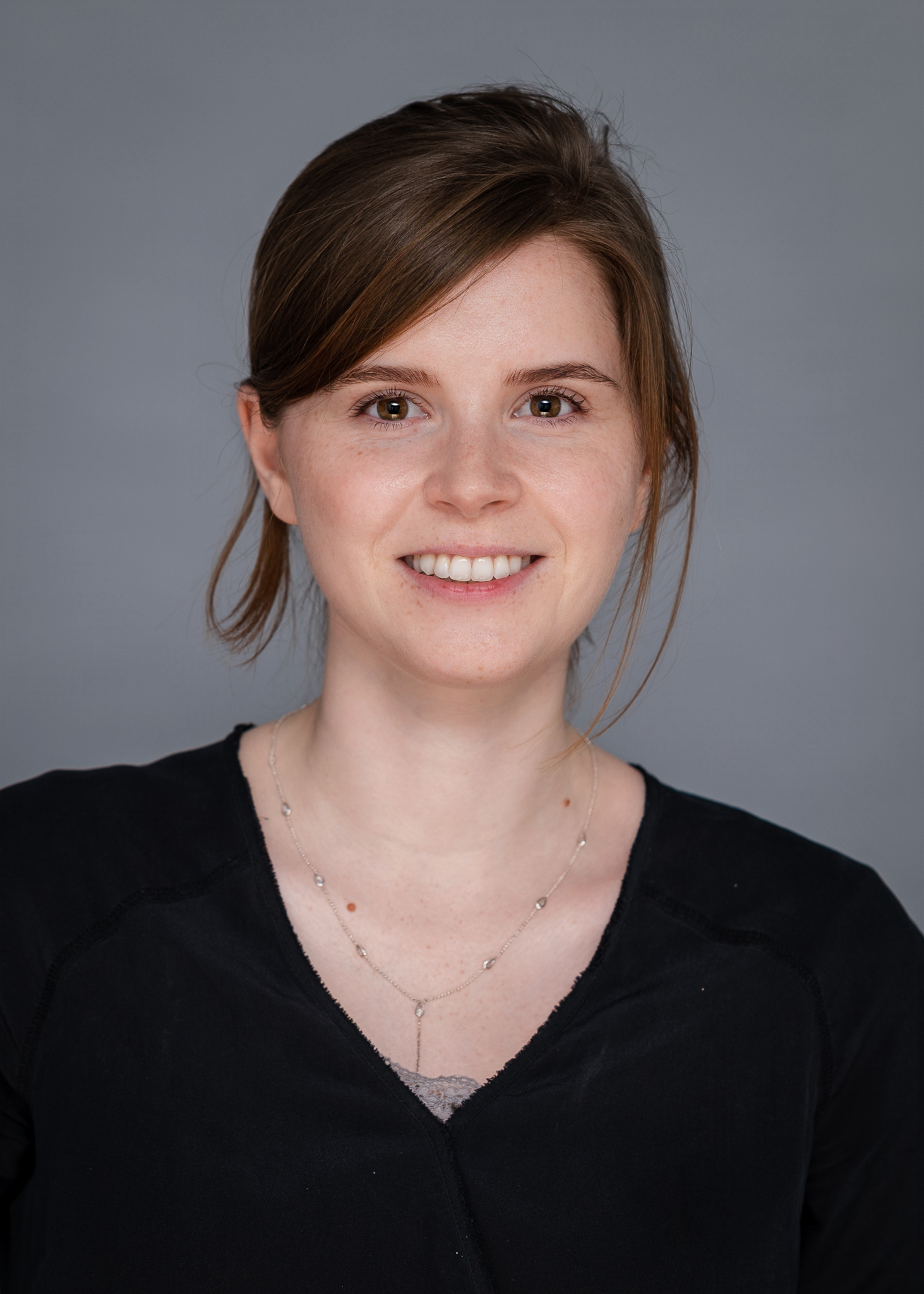
10/09/2026 | Leonie Dziomba is a cognitive scientist in the research group ‘Transformation through Transdisciplinarity’. Her PhD research focuses on knowledge transfer in the marine sciences. In her thesis, using plankton as a case study, she examines how interactions between scientists and non-scientific actors are shaped by the technologies and shared objects they work with – and what impact this has on social learning and knowledge-building processes. In a new study, she explores how maps, models, diagrams and research tools influence our thinking and how we interact with one another.
What was the initial question behind your work?
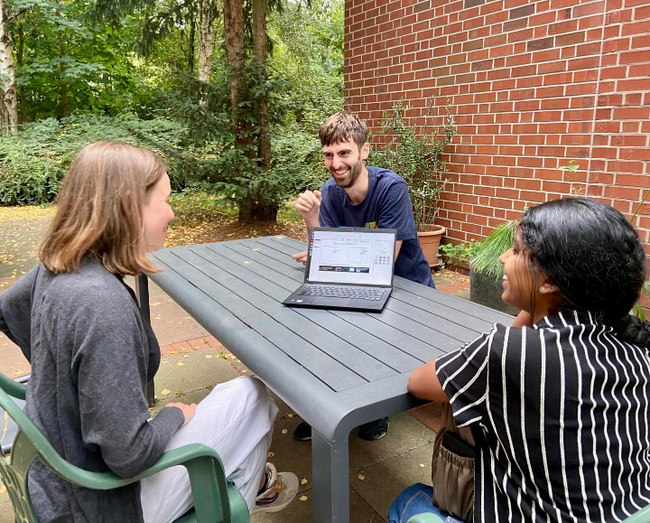
When researchers from different disciplines communicate and collaborate with one another or with people outside the field of marine research, this exchange rarely remains purely verbal. It often revolves around shared objects, such as maps, models, diagrams or measuring instruments. My initial question was: How do these objects affect our thinking and our interactions? And how can we use a targeted reflection on our use of shared objects to make the exchange of knowledge and collaboration in the field of marine research more inclusive?
How did you approach this? What did you investigate, and what methods did you use?
I brought together existing theories from the sociology of science and cognitive science and applied them to marine research. The core idea is that shared objects have both a cognitive effect (they reduce the cognitive load) and a social effect (they structure collaboration).
What are your findings?
- Such shared objects work because different groups can use them without agreeing on what they mean. In marine science, this shows in something as ordinary as a habitat map: for an ecologist it is a tool for recording biodiversity, for a government agency a planning instrument, for a fisher a question of access and livelihood. It is often this ambiguity that makes collaboration between different groups possible in the first place.
- Shared objects operate on two levels simultaneously. On the one hand, they take the strain off our thinking: instead of having to keep everything in our heads, we can point to something, adapt it, and look at it together. On the other hand, they organise our interactions. They provide the discussion with a common point of reference against which differences can be highlighted and, where necessary, negotiated.
- These objects are not neutral. They make certain things visible and others easy to overlook. If a map shows only ecological zones, there is a risk that seasonal fishing patterns or culturally significant sites will disappear from shared awareness.
- The paper offers two things: a language for something that many marine researchers do without naming it, and a set of concrete reflective questions for one’s own practice with shared objects.
What conclusions can be drawn from this?
The analysis demonstrates that it is worthwhile to engage more consciously with these objects. Understanding how they function also allows us to critically examine our work with them. Can the object still be modified, or is it already fixed? Can all those involved actually understand and use it? And how is it given institutional weight?
Questions of access, participation and power are difficult to discuss in abstract terms. However, they become very concrete when we ask: Who can actually read this map? Who is allowed to alter it? Engaging with shared objects provides an accessible entry point into questions that would otherwise be difficult to address in everyday research.
This is particularly interesting for early-career researchers, who work extensively with objects but often have little influence over the broader direction of a project. However, impact can be achieved through the design of maps, models or diagrams; this just isn't typically recognised. Having a language for this work helps to make its value visible.
What impact might this have on ecosystems, people or animals?
The impact is indirect; these tools influence the courses of action that are considered in the first place. What they do not capture or reflect is unlikely to enter the discussion and often does not enter the decisions either. Therefore, those who shape which tools are used and how they are used also influence what is ultimately protected or managed.
Why are the results socially relevant?
Because shared objects often play a significant role when actors outside the scientific community are involved in research, for example in citizen science projects, or when researchers collaborate with local actors, such as fishermen and fisherwomen, public authorities or coastal communities. A well-chosen and appropriately introduced shared object can break down barriers to engaging with scientific content and getting involved.
What are the next steps regarding the findings?
The paper forms part of my PhD thesis. In it, I conduct an empirical investigation into how such processes unfold, using the PlanktoScope as a case study; a device for capturing images of plankton that is used by various groups of actors. Depending on who is using it, its purpose can vary greatly: it can serve as a research tool for answering very specific scientific questions, or as a monitoring tool – for example, to observe climate-related changes in plankton communities over extended periods, as an introduction to the subject for school classes, or even a gateway to marine research for volunteers who collect samples from their own boats.
Publication:
Dziomba, L (2026). How To Do Things With Objects: Boundary Objects in Inter- and Transdisciplinary Marine Research. Ocean and Society, 3, Article 12761. https://doi.org/10.17645/oas.12761
 Contacts
  Programme Areas
  Working Groups