



Dieser Text ist zur Zeit nur auf Englisch verfügbar..
What We Are Doing
The research group investigates carbon and nutrient cycles in the ocean and in tropical coastal regions, as well as their interactions with the climate. We combine observations, experiments, remote sensing and numerical models to gain a better understanding of the effects of natural climate variations and human interventions. Here, we provide an overview of these cycles and present our three main areas of research: CO₂ storage in the ocean, the formation of oxygen minimum zones, and greenhouse gas emissions from nearshore aquatic ecosystems.
1. Carbon and Nutrient Cycling: Our Impact and Its Implications for Research
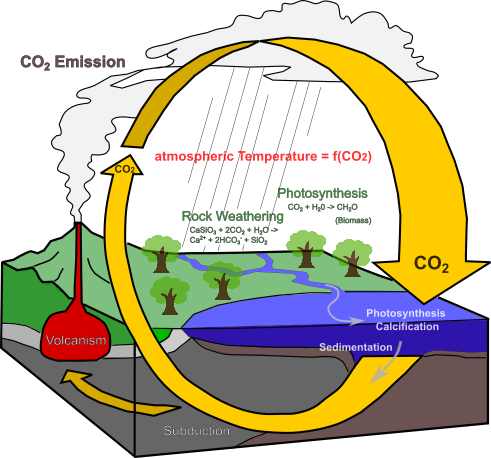
Carbon is a key element in understanding the Earth system, as it is essential for the biosphere and the climate. As a component of organic molecules, it forms the building blocks of life (i.e. proteins, carbohydrates, etc.), whilst in the form of carbon dioxide (CO₂) and methane (CH₄) it acts as a greenhouse gas in the atmosphere and thus has a significant influence on the Earth’s temperature (see figure). If the temperature exceeds or falls below certain thresholds, the building blocks of life cease to function, meaning that life as we know it cannot develop. A look back at the geological past shows that the interplay between our planet’s internal dynamics – through which CO₂ enters the atmosphere, for example as a result of volcanic activity – the ocean, which stores large quantities of this CO₂, and the biosphere has created a climate in which life could develop. As the synthesis of the building blocks of life requires not only carbon but also nutrients such as nitrogen and phosphorus, the cycles of these elements are closely linked to the carbon cycle. The resulting sensitive biogeochemical system was rarely stable. It was subject to changes that led to mass extinctions and the development of new life forms, but never completely exceeded the boundary conditions necessary for the development and survival of life.
Figure: Schematic representation of the global carbon cycle, showing volcanic CO₂ emissions, the release of bicarbonate during the dissolution (weathering) of limestone, and the sedimentation and subduction of limestone and biomass formed through photosynthesis and calcification. For a more detailed description of the global carbon cycle, please refer to Rixen 2023.
Today, humans are intervening deeply in the carbon and nutrient cycles. In doing so, they are altering the framework conditions of the Earth system and suffering the resulting consequences, such as climate change and mass extinctions. At the same time, they are seeking solutions to adapt to ongoing changes, with the aim of averting crises and safeguarding the foundations of human societies. This presents biogeochemical research with a number of challenges. These include, amongst other things, determining how the sensitive Earth system reacts to human activity. Furthermore, it is essential to develop methods with which relevant processes can be observed and thus also specifically controlled. In this context, we are addressing selected topics, including CO₂ storage in the ocean, the expansion of oxygen minimum zones – that is, areas where marine organisms, which are of great importance to our food supply, literally lack the air they need to breathe – as well as processes that control greenhouse gas emissions in nearshore aquatic ecosystems, particularly in tropical coastal peatlands and rivers.
2. CO₂ storage in the ocean
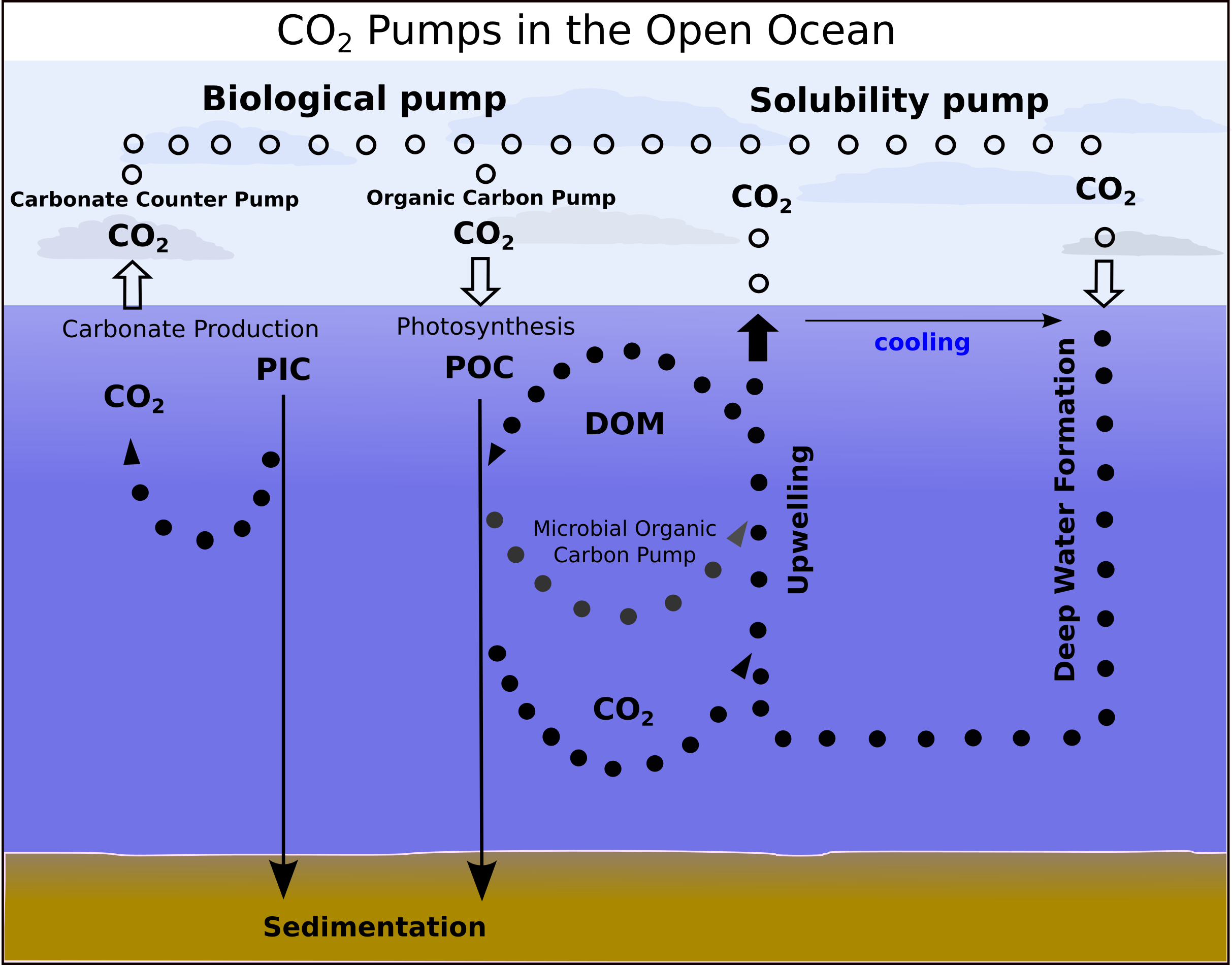
The ocean is a major sink for anthropogenic CO₂, i.e. carbon dioxide released primarily during the combustion of fossil fuels such as oil, coal and natural gas. It thus helps to mitigate climate change. However, there remain considerable uncertainties in quantifying CO₂ storage in the ocean, attributable to both methodological limitations and an incomplete understanding of the underlying processes (see figure). CO₂ is sequestered in the ocean via the so-called solubility pump and the biological carbon pump. However, it is assumed that the solubility pump alone is responsible for the uptake of anthropogenic CO₂. Neither the extent nor the direction of future changes in the biological carbon pump can currently be reliably predicted, although it is becoming increasingly clear that it responds not only to climate change but also to other anthropogenic pressures such as fishing.
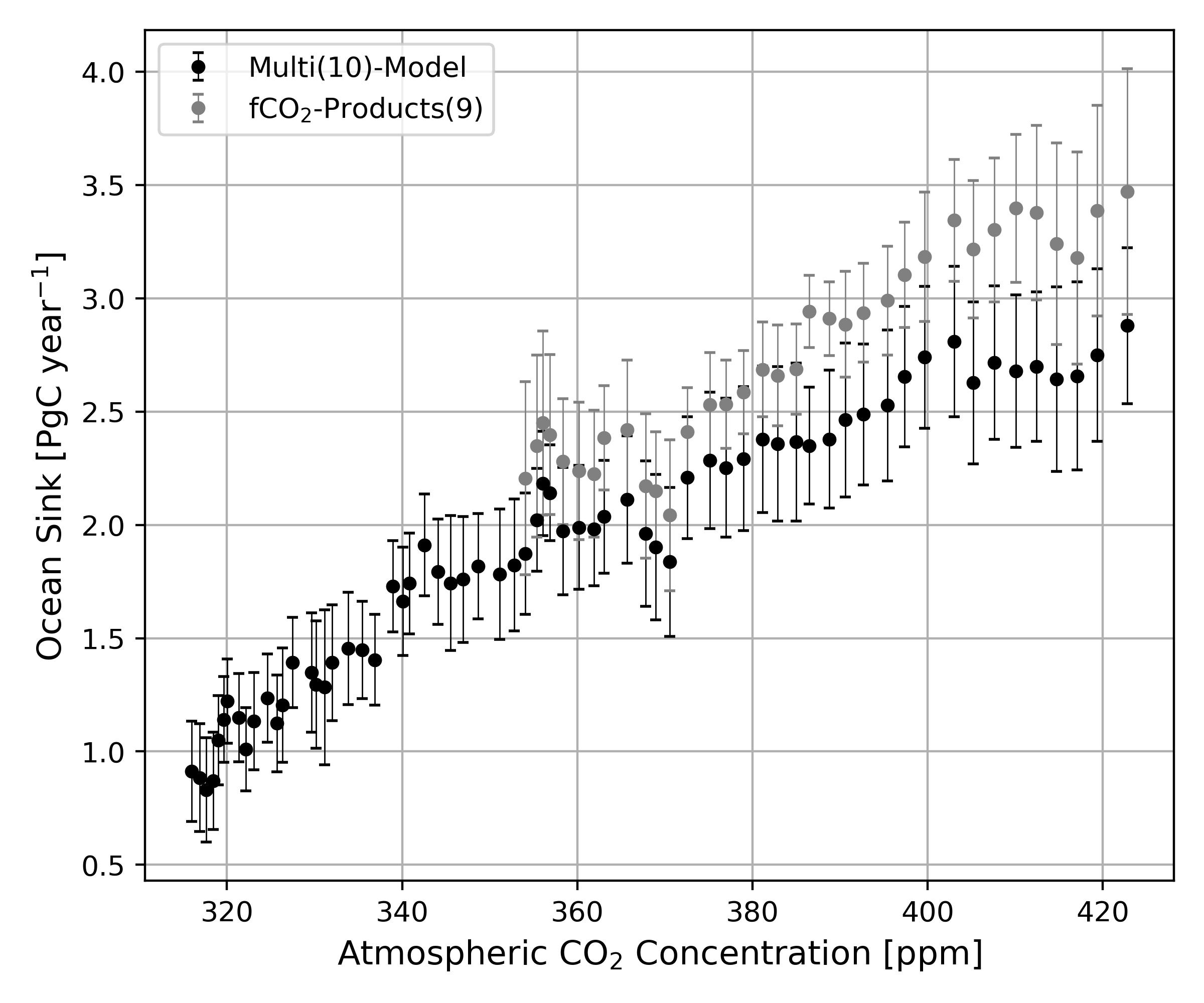
Figure: The Global Carbon Project (GCP) synthesises data from ten global models and nine AI (fCO₂) products that quantify CO₂ uptake by the ocean. The individual models and AI methods differ, with the results from the AI methods generally indicating a significantly higher rate of CO₂ uptake by the ocean than those from the models. Data source: https://www.globalcarbonproject.org/ and the atmospheric CO2 concentrations have been obtained from https://gml.noaa.gov/webdata/ccgg/trends/co2/co2_mm_gl.txt
Projects:
- FRESCH (Fine Resolution Explorer for Salinity, Carbon and Hydrology)
- ACAROA (Atmospheric Clouds, Aerosol, and Radiation in the Southern Ocean around Aotearoa, New Zealand)
- TRAFFIC (Trophic Transfer Efficiency in the Benguela Current)
- LTM-BUS (Long-term moorings in the Benguela Upwelling System)
Highlights:
Among other things, it has shown that the Benguela coastal upwelling systems off Namibia and South Africa are of central importance to the functioning of the biological carbon pump (Siddiqui et al. 2023). Here, it sequesters CO₂ that is lost during the formation of the upwelling source waters near the Southern Ocean. According to our estimates to date, the biological carbon pump in the Benguela coastal upwelling system captures approximately 44% of the CO₂ that it loses in the Atlantic sector of the Southern Ocean. However, initial studies show that bottom trawling weakens the biological carbon pump in the Benguela coastal upwelling areas by mobilising carbon from the sediments (Siddiqui et al. 2024). CO₂ emissions caused by human interventions in coastal ecosystems are subject to reporting under the Paris Agreement, but so far there is a lack of concepts and strategies to establish coastal upwelling systems as ‘blue carbon’ ecosystems and integrate them into national greenhouse gas budgets (see discussion in Rixen et al. 2024)
3. Oxygen Minimum Zones (OMZ)
OMZs (Oxygen Minimum Zones) are widespread in the ocean and arise from the interaction between biological oxygen consumption and physical oxygen input (see Rixen et al. 2020). Biological oxygen consumption results from the decomposition of plankton biomass, which is exported from the ocean’s euphotic zone into deeper water layers. Physical oxygen supply is driven by the vertical and horizontal mixing of oxygen-rich water masses into the OMZs. OMZs usually form directly below the euphotic zone and can extend to water depths of over 1,000 m. From a biogeochemical perspective, they are of particular interest when the low oxygen concentrations within the OMZ facilitate the transition to anoxic conditions. As this transition takes place, organisms that require dissolved oxygen for respiration, such as fish, are displaced. At the same time, within microbial communities, aerobic microbial transformation processes are increasingly replaced by anaerobic processes. Anaerobic processes include, for example, the reduction of nitrate to molecular nitrogen (N₂), which, amongst other things, also increases the formation of N₂O. Given that N₂O is a potent greenhouse gas and nitrate availability in the euphotic zone often limits primary production, the transition to anoxia can have far-reaching consequences for the functioning of marine ecosystems even beyond the OMZ. The OMZ in the northern Indian Ocean is one of the most extensive and pronounced OMZs in the world’s oceans and is responsible for around 11 per cent of global nitrate reduction in the oceanic water column. In other words, changes to this OMZ could have far-reaching consequences.
Projects:
- BIOCAN (Biogeochemistry of carbon and nitrogen in the Arabian Sea: a contribution to the International Indian Ocean Expedition 2)
- BIONIC (The Biogeochemistry of Nitrogen Cycling in the Arabian Sea – A Contribution to the International Indian Ocean Expedition 2)
Highlights:
Contrary to the global trend and the development of the OMZ in the northern Indian Ocean prior to 2013 (see Rixen et al. 2020), oxygen concentrations in this region have been rising again for several years. We attribute this trend-reversal to a weakening of the global thermohaline circulation, as well as to a slowing down and restructuring of the meridional overturning circulation in the Indian Ocean (Oboh et al. 2026).
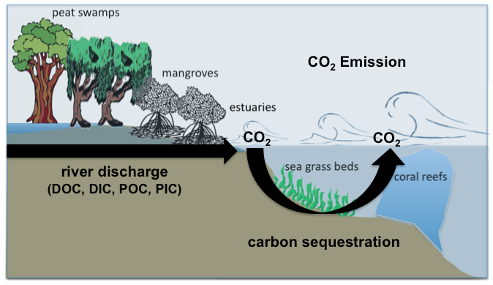
4. Greenhouse gas emissions in nearshore aquatic ecosystems
The aquatic continuum, which extends from the land via rivers and wetlands – such as coastal peatlands – to the open ocean, plays a crucial role in the global carbon cycle. Within this continuum, carbon and nutrients are mobilised, transported and transformed from terrestrial ecosystems. These processes release greenhouse gases such as CO₂, CH₄ and N₂O into the atmosphere while transporting particulate and dissolved carbon and nutrients into the ocean, thereby influencing marine ecosystems, oceanic greenhouse gas emissions and the global carbon cycle.
Projects:
- SPICE (Science for the Protection of Indonesian Coastal Marine Ecosystems)
- DFG – Malaysia
- ColDeMAR Task 3 (Colombia-German Platform for Tropical Marine Biodiversity and Climate Change)
- TropEcS-GHG (Modelling socio-economic dimensions across tropical coastal ecosystems and the Earth system)
Highlights:
Indonesia: Our SPICE findings showed that the conversion of coastal peatlands into palm oil plantations is associated with a dramatic loss of soil carbon. As peat consists largely of organic matter and thus of carbon, its loss not only increases CO₂ emissions (Wit et al. 2015 and Wit et al. 2018), but also leads to the subsidence of coastal land (Rixen et al. 2016 and Rixen et al. 2021). The resulting relative rise in sea level far exceeds the global rise in sea level. These findings are a examples of how a plan that was originally well-intentioned and initiated by the EU – the production of biodiesel from palm oil – can backfire. They highlight how important scientific research and a comprehensive understanding of the carbon cycle are for identifying misguided decisions and effectively addressing the multiple crises we face.
Malysia/Indonesia: In the spirit of the SPICE project we focused on strategies for mitigating climate change, such as enhanced rock weathering. During this process, the weathering of applied rock powder sequesters atmospheric CO₂ and generates bicarbonate (HCO₃⁻), thereby increasing pH. High rainfall and high temperatures are increasingly bringing the tropics – and with them the coastal peatlands – into the spotlight as areas subject to enhanced rock weathering. Despite adverse circumstances resulting from the COVID-19 pandemic, we were able to demonstrate, using observations and simple box models, that the decomposition of organic matter in tropical peat draining rivers increases exponentially with pH (Klemme et al. 2022a). Model estimates therefore show that increased rock weathering in tropical peatlands could accelerate carbon loss and thus partially or completely negate the intended CO₂ removal (Klemme et al. 2022b).
 AG Mitglieder
 Publikationen AG Kohlenstoff- und Nährstoffkreisläufe
 Wissenschaftliche Projekte